
“This devotional is a part of the Understanding Stress from Science and Scripture.”
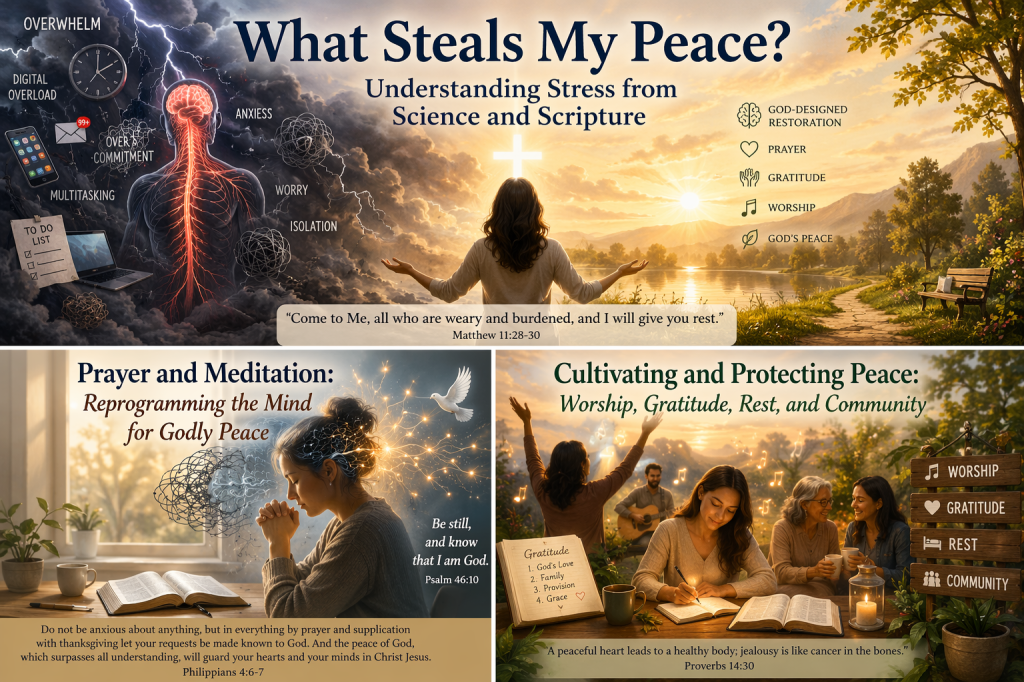
Peace is not just an emotion; it is a physiological and spiritual state designed by God. Our minds often replay worries, regrets, and anxieties, keeping the sympathetic nervous system (SNS) in overdrive. Yet intentional prayer and meditation serve as tools to calm the nervous system, rewire thought patterns, and anchor our hearts in God’s presence.
How Prayer and Meditation Restore Peace:
- Activating the PNS: Prayer and meditation lower heart rate, reduce cortisol, and ease tension, helping the body and mind recover from chronic stress.
- Neuroplasticity: Reflecting on Scripture reshapes neural pathways, replacing fear-driven thoughts with God’s truth (Romans 12:2; 2 Corinthians 10:5).
- Emotional Regulation: Engaging the mind in intentional reflection calms the amygdala and strengthens resilience.
- Spiritual Alignment: Prayer invites God’s presence, grounding our hearts in His promises and fostering a sense of security and hope.
Practical Applications:
- Daily Prayer: Set aside morning, evening, or mid-day moments to offer heartfelt prayers.
- Scripture Meditation: Focus on a specific verse, pondering its meaning and how it applies to your life (Psalm 1:2-3).
- Guided Reflection: Journal thoughts and prayers, practice mindful breathing, or use devotional prompts to deepen focus.
Personal Reflection:
Before adopting a disciplined prayer and meditation routine, mornings often felt chaotic. Racing thoughts about responsibilities and unresolved concerns set a stressful tone. By starting the day with a brief prayer and Scripture meditation, I noticed my mind gradually settled. Philippians 4:6-7 became alive, guarding my heart and mind with God’s peace.
Whenever grief intensified the tension in my body and mind, meditation on God’s promises blessed me, particularly Romans 12:2, allowed me to replace fear-driven thoughts with hope and trust. Journaling reflections after reading Psalm 1:2-3 reinforced this process, providing clarity and emotional regulation. Small intentional acts, like mindful breathing or pausing to thank God, activated the PNS and created tangible calm.
Through prayer and meditation, I discovered that peace is not passive, it is cultivated. By intentionally engaging body, mind, and spirit, God’s presence becomes perceptible in everyday life. Even brief sessions of focused reflection invite the Holy Spirit to reorder thoughts, calm racing emotions, and provide inner stability.
Reflection:
Prayer and meditation are bridges between the spiritual and physiological dimensions of peace. Consistent practice transforms anxiety into resilience, worry into trust, and chaos into calm. The mind, body, and spirit align when we pause intentionally to invite God’s presence.
Action Steps:
- Choose one Scripture verse to meditate on today.
- Journal reflections or prayers for 5–10 minutes.
- Take three slow, deep breaths at intervals during the day, inviting God’s presence.
Scriptures: Philippians 4:6-7; Psalm 1:2-3; Romans 12:2


Leave a Reply