
“This devotional is a part of the Understanding Stress from Science and Scripture.”
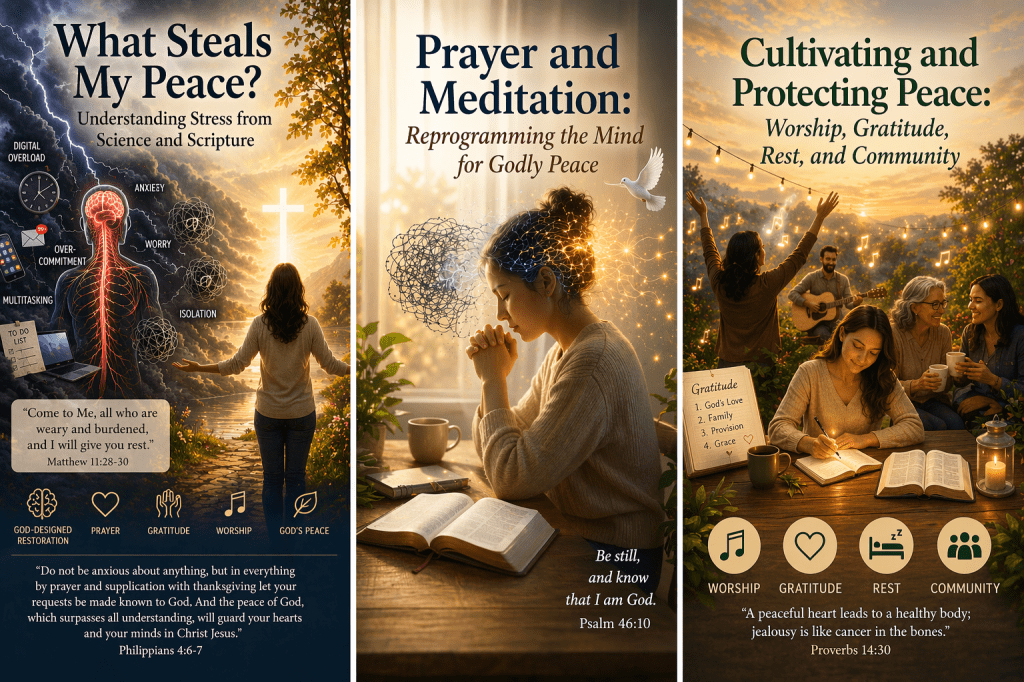
Peace is fragile in a world that constantly demands our attention. Our emotional, spiritual, and physical well-being are deeply interconnected, and maintaining peace requires intentional practices that nourish all three dimensions. Worship, gratitude, acts of kindness, rest, community, and healthy boundaries are not just spiritual ideals—they are practical tools to help the mind, body, and spirit thrive.
1. Cultivating Peace: Worship, Gratitude, and Acts of Kindness
Engaging in worship, expressing gratitude, and performing acts of kindness positively impact both physiology and spirituality. Worship, whether through singing, listening to praise music, or silent adoration, reduces amygdala overactivity, strengthens emotional control, and activates the parasympathetic nervous system (PNS). Gratitude journaling or reflecting on specific blessings stimulates dopamine and serotonin pathways, increasing resilience and emotional well-being. Acts of kindness, even small ones, release oxytocin, reduce sympathetic nervous system overdrive, and deepen social and spiritual connections.
Practical Applications:
- Start the day with a short devotional, worship music, or silent praise.
- Write down two to three things you are grateful for each day.
- Perform at least one intentional act of kindness, such as encouraging a friend or helping a neighbor.
Even in the most difficult times of worship, daily gratitude and journaling helped shift my focus from grief to God’s faithfulness. Small acts of kindness, like offering support to others, brought calm and strengthened my connection with God. These practices remind me that peace is cultivated when we intentionally engage with God and serve others.
Scriptural Anchors: 1 Thessalonians 5:18; Psalm 100:1-5; Philippians 4:4-7
2. Protecting Peace: Rest, Sabbath, Community, and Boundaries
Peace must be protected as intentionally as it is cultivated. Rest, community, and boundaries safeguard our nervous system and align us with God’s design for holistic well-being. Sleep, Sabbath observance, and retreat activate the PNS, regulate emotions, consolidate memory, and restore immunity. Engaging in fellowship strengthens trust, reduces overactivation of the nervous system, and builds resilience. Healthy boundaries, learning to say “no”,protect energy and prevent overcommitment.
Practical Applications:
- Schedule structured rest periods or digital detoxes.
- Connect meaningfully with family, friends, or faith communities.
- Identify one activity to say “no” to this week to protect your energy.
Personal Reflection:
Observing Sabbath rest and engaging in community revitalized my emotional strength. Setting boundaries preserved my energy, allowing a deeper connection with God. Following Jesus’ example of withdrawing to rest (Mark 6:31) shows that peace is sustained when we honor God’s rhythms for life.
Scriptural Anchors: Exodus 20:8-11; Mark 6:31; Hebrews 10:24-25
3. Integrating Practices for Holistic Peace
Combining spiritual practices with lifestyle disciplines harmonizes mind, body, and spirit, reduces anxiety, and fosters resilience. Whether through worship, gratitude, acts of kindness, rest, fellowship, or boundaries, peace becomes a sustainable rhythm rather than a fleeting feeling.
Action Steps:
- Daily: Worship, gratitude journaling, one act of kindness, three slow breaths, and inviting God’s presence.
- Weekly: Sabbath rest, meaningful community engagement, and setting one protective boundary.
- Mini Practices: Meditation, reflection, sending encouragement, and noticing God’s presence throughout the day.
Reflection and Prayer:
Heavenly Father, thank You for guiding me in worship, gratitude, rest, and community. Help me notice Your presence, protect my peace, and align my mind, body, and spirit with You. May these practices renew my heart, strengthen my resilience, and deepen my trust in You. Amen.


Leave a Reply