
(This devotional is a part of the Understanding the Book of Ezekiel series)
Key Themes and Purpose
The central message of Ezekiel is God’s unwavering justice paired with His redemptive hope. Though Israel had broken their covenant, God promised restoration. He would give His people a new heart and a new spirit—renewing them from within so they could once again live in obedience and enjoy a right relationship with Him (Ezekiel 36:26-27). This transformation points to a future where God’s people will walk in His ways through the empowerment of His Spirit.
Major Prophetic Visions
Ezekiel’s ministry was marked by dramatic and symbolic visions meant to both warn and encourage:
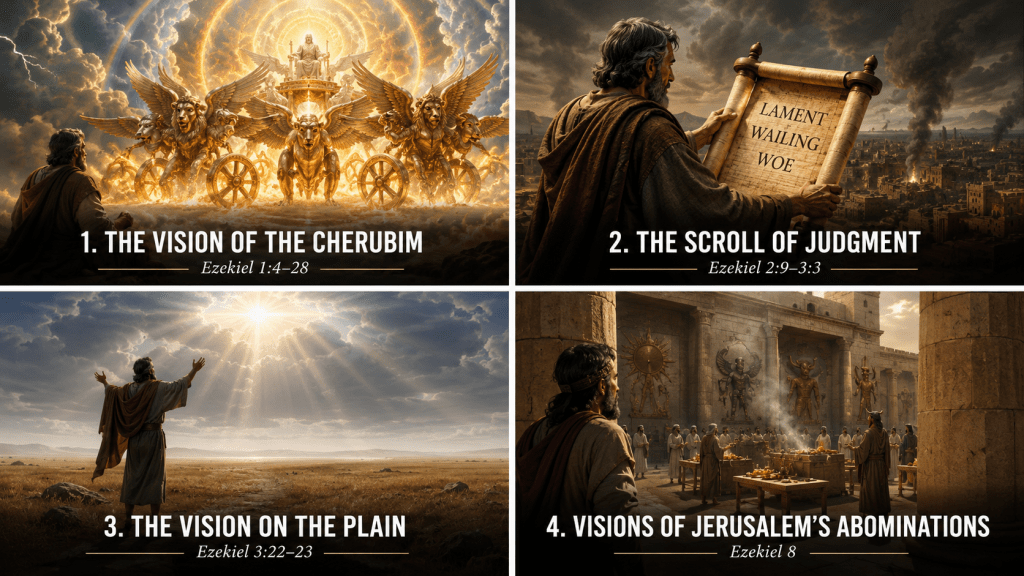
- The Vision of the Cherubim (Ezekiel 1:4–28) – A spectacular display of God’s glory and omnipresence.
- The Scroll of Judgment (2:9–3:3) – A call to prophesy words of lament and woe.
- The Vision on the Plain (3:22–23) – A reaffirmation of his prophetic calling.
- Visions of Jerusalem’s Abominations (Ch. 8) – Exposing idolatry within the Temple.
- The Valley of Dry Bones (37:1–10) – Symbolizing Israel’s revival and return to life.
- The New Temple and Holy City (Ch. 40–48) – A vision of God’s future dwelling and perfect order.
Spiritual Symbolism and Meaning
- “Son of man” – God repeatedly calls Ezekiel “son of man” to emphasize his human limitations and dependence on divine power.
- Heart of Stone to Heart of Flesh – A call for internal transformation; God desires to replace hardened hearts with tender, obedient ones (Ezekiel 36:26).
- The River from the Temple (Ezekiel 47) – A vision of restoration, where healing waters flow from God’s dwelling, bringing life to even the Dead Sea.
What Makes Ezekiel Unique?
Ezekiel’s writings blend prophetic vision with priestly concern, emphasizing ritual purity, worship, and covenant faithfulness. He addresses both judgment and restoration with vivid imagery and enacted parables. Even when bound (Ezekiel 3:25), or commanded to symbolically lay siege to clay models (Ezekiel 4:1–2), he obeys, demonstrating the weight of his divine assignment.
Lessons from Ezekiel
The book of Ezekiel calls us to self-examination and reminds us to seek God, especially in times of hardship. It assures us that God’s presence is not confined by geography or circumstance. True holiness begins in the heart.
As Isaiah 43:18–19 declares, “Forget the former things; do not dwell on the past. See, I am doing a new thing!” In the same spirit, Ezekiel encourages hope. God’s judgment is never the end, His desire is restoration and renewal.
 ruminate with annie
Leave a comment